


Curriculum Overview - Phase Two (KS4)
Students have a 25-hour week and study a core programme of English, maths, double or triple science, core RS and core PE.
Students make their phase 2 option choices at the end of Year 9 and choose from a range of subjects from four different option blocks.
All students choose between history or geography in the humanities option block.
In option block 1 and 2 students have a wide range of creative qualifications to support their other core academic qualifications. These are designed to be as wide ranging as possible to help support students’ future careers, while also giving them the opportunity of exploring different ways of working through vocational subjects.
In option block 3 students study an option which is appropriate to their needs and future career plans. In this option block there are a wide range of subjects available which comprise of a non exhaustive list, including French, religious studies and a range of vocational courses.
There is also a work related pathway for some students from Phase 2 onwards. These subjects will change each year based on the needs of the students and group.
In Year 11 the curriculum expands to a 30-hour week, with all lessons finishing at 3:40 to ensure that they have all the preparation they need before their exams in their final year of secondary school. This is not an optional additional lesson and is designed as part of the curriculum.
Example of potential option block subjects
| Subjects |
| Art |
| Dance |
| Drama |
| Enterprise/Business |
| Health and Social |
| Hospitality and Catering |
| ICT |
| Media |
| Music |
| Photography |
| RS |
| Sport/Physical Education |
| Travel and Tourism |
If you would like to find out more about our curriculum please contact us on 01924 330640 or e-mail contactus@cathedral.trinitymat.org
Phase Two (KS4) - Art
What students are learning in Art through Year 10 and Year 11
Why is Art important?
Art and Design at Trinity Academy Cathedral develops creativity, confidence and critical thinking skills that are essential for success in further education, the creative industries and a wide range of careers. Students explore diverse artists, designers and movements from across the world while building strong technical skills in drawing, painting, printmaking, mixed media and 3D processes such as ceramics.
At KS4, students work as creative practitioners: researching ideas, refining outcomes and evaluating their work. These skills support progression into careers such as graphic design, fine art, fashion, architecture, photography, media and marketing, as well as pathways where originality, problem‑solving and visual literacy are highly valued. Art also promotes ethical awareness, individuality and inclusive self‑expression, preparing students to contribute creatively to wider society.
GCSE Art and Design – Fine Art (AQA 8202)
Students complete two components across 120 guided learning hours. Work is assessed against the four AQA assessment objectives (AO1–AO4) and is externally moderated.
- Component 1: Portfolio (Coursework) – 60%
- Component 2: Externally Set Assignment – 40%
All work is combined to produce a final GCSE grade.
What students are learning through Year 10 and Year 11
Year 10 – Foundations Practices
In Year 10, students are introduced to the fundamentals of Fine Art, developing practical skills, creative confidence and an understanding of how artists work.
Students complete an Introduction to Fine Art project, which includes:
- Learning and practising a range of fine art techniques and processes
- Working with materials such as drawing media, painting, mixed media, printmaking and sculpture
- Exploring the formal elements (line, tone, colour, texture, form, composition)
- Recording ideas, observations and experiments through sketchbook work
- Researching and responding to the work of artists and art movements
Students take part in structured workshops, skill-building tasks and short projects, gradually building a portfolio that demonstrates experimentation, technical control and developing ideas.
Year 11 – Sustained and Independent Practice
In Year 11, students complete a sustained project for Component 1, allowing them to develop ideas in greater depth and refine a personal response. Students:
- Investigate artists and visual sources independently
- Develop and refine ideas through sustained experimentation
- Record their creative journey through sketchbook work, annotation and studies
- Produce a personal and meaningful final outcome
Later in Year 11, students complete Component 2: Externally Set Assignment, issued by AQA. Students select a starting point from the exam paper and complete:
- A preparatory period of development and experimentation
- A 10-hour controlled practical exam, where they produce a final outcome under exam conditions
This component assesses students’ ability to work independently, manage time effectively and apply the skills and understanding developed across the course.
How will I be assessed?
All work is assessed using the four AQA Art and Design Assessment Objectives, which are equally weighted:
- AO1 – Develop ideas through investigation and research
- AO2 – Experiment with and refine processes, techniques and materials
- AO3 – Record ideas, observations and insights
- AO4 – Present a personal and meaningful final response
Component 1: Portfolio
- Sustained project plus supporting work
- Assessed internally and externally moderated
- Worth 60% of the final grade
Component 2: Externally Set Assignment
- Includes a 10-hour controlled exam
- Externally set and assessed
- Worth 40% of the final grade
Which examination board am I following?
AQA GCSE Art and Design – Fine Art (8202)
Which websites should I use to support my learning?
There are no compulsory websites for this course. Students are encouraged to use a range of artist resources, gallery websites and exhibitions to support independent research.
Who to contact about Phase Two:
S. Dearnley – Curriculum Leader Art
sdearnley@cathedral.trinitymat.org
Phase Two (KS4) - Digital Information Technology
What students are learning through Year 10 and Year 11
Why is Digital Information Technology Important?
Digital technology is at the heart of modern life — from smartphones and apps to online services, cloud storage, and data security. Students interact with digital systems every day, so understanding how they work is essential for future careers and everyday life.
Studying DIT helps students develop practical digital skills, understand how information is created and managed, and explore how technology supports businesses and organisations. These skills are highly valued in further education and the workplace, especially as digital roles continue to grow across all industries.
What Will I Be Studying?
Component 1: Exploring User Interface Design Principles and Project Planning Techniques
Students learn how to design effective user interfaces by understanding what makes them clear, accessible and easy to use. They explore how different users have different needs, which helps them create solutions that are inclusive and functional. Alongside this, they develop skills in planning and managing a digital project, learning how to organise tasks, set deadlines and monitor progress. Finally, they review and refine their digital products, improving them based on testing and feedback. Together, these skills help students understand how high‑quality digital products are designed, developed and improved in real‑world settings.
Component 2: Collecting, Presenting and Interpreting Data
Students learn how data is gathered and stored so that it can be used effectively by organisations. They develop confidence using spreadsheets and other digital tools to analyse information, identify patterns and draw conclusions. They also learn how to present data clearly so it can support decision‑making in real situations. By understanding how businesses use data to solve problems, students build strong analytical and problem‑solving skills that are valuable in both education and the workplace.
Component 3: Effective Digital Working Practices
Students explore key aspects of modern digital practice, including the different types of cybersecurity threats organisations face and the methods used to protect systems and data. They also learn how digital systems support the day‑to‑day operations of businesses and how these systems are managed effectively. Alongside this, students examine the legal, ethical and environmental responsibilities that come with using technology. Finally, they consider how modern technology is transforming the workplace and changing the way people work. Together, this component prepares students for real‑world digital environments and the expectations of today’s technology‑driven industries.
How Will I Be Assessed?
| Component | Title | GLH | Level | Assessment Type |
| 1 | User Interface Design & Project Planning | 36 | 1/2 | Internal |
| 2 | Data Collection, Presentation & Interpretation | 36 | 1/2 | Internal |
| 3 | Effective Digital Working Practices | 48 | 1/2 | External Exam |
Final grades available at Level 2: Pass, Merit, Distinction, Distinction*
Which examination board am I following?
Pearson BTEC Tech Award in Digital Information Technology
Digital Information Technology (2022) | BTEC Tech Award | Pearson qualifications
Useful Websites to Support Learning
- BBC Bitesize (Computing & ICT): https://www.bbc.co.uk/bitesize
- Teach‑ICT: https://www.teach-ict.com
- Pearson DIT Support Page: https://qualifications.pearson.com (qualifications.pearson.com in Bing) (search “DIT Tech Award”)
- Seneca Learning (DIT & ICT): https://senecalearning.com
Who to Contact About Phase Two DIT
Mr P Donlon – Curriculum Leader – Computing, Media & Business –pdonlon@cathedral.trinitycathedral.org
Phase Two (KS4) - English
What students are learning through Year 10 and Year 11
Why is English important?
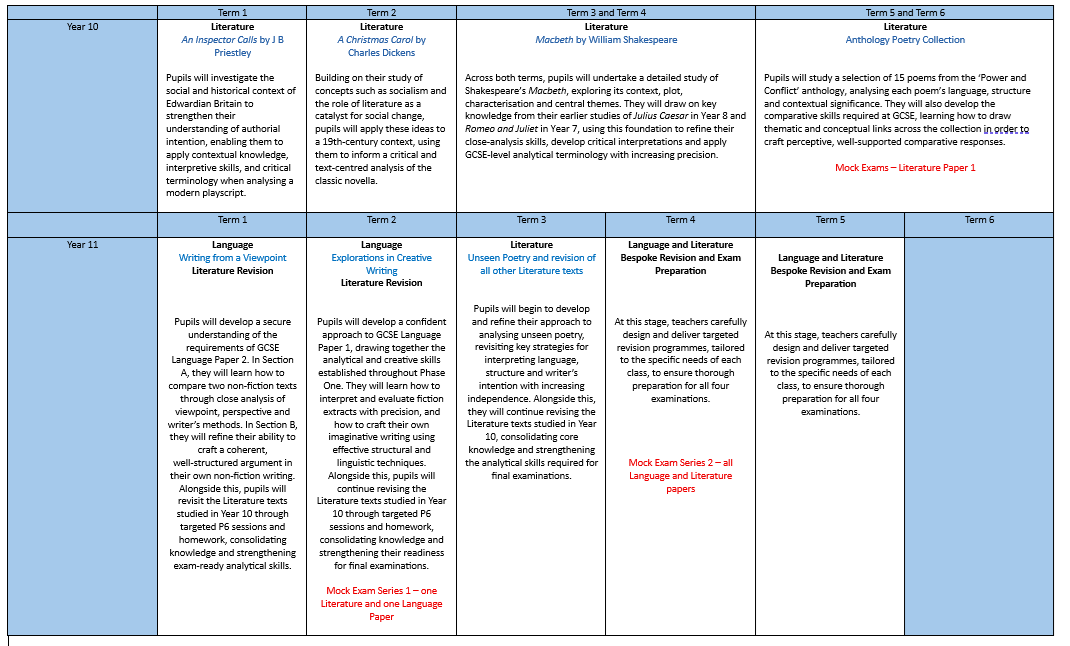
Our English curriculum is intentionally rigorous, academically robust, and designed to inspire excellence. It is grounded in core disciplinary knowledge and delivered through a carefully sequenced programme that builds systematically from primary foundations to GCSE mastery and beyond. Students develop a sophisticated command of vocabulary, grammar, genre, form, the craft of writing, authorial influence, critical reading, and literary theory. They benefit from expert instruction, high‑quality modelling, and purposeful opportunities to write for authentic audiences and speak with clarity, authority, and conviction.
Curriculum sequencing ensures that essential knowledge is revisited and strengthened over time, enabling students to refine their understanding and apply it with increasing precision. This cumulative approach supports deep learning and equips students with the intellectual tools needed for academic success in GCSE English Language and English Literature, and across the wider curriculum.
Our curriculum fosters a genuine love of literature through a thoughtfully curated selection of texts. Students encounter the established literary canon alongside a broad range of contemporary and diverse voices, perspectives and experiences. This breadth not only enriches cultural understanding but also ensures that every student sees themselves reflected—and challenged—within the curriculum.
Which examination board am I following?
AQA GCSE Language and Literature
How will I be assessed?
At GCSE, students studying AQA English Language and English Literature are assessed entirely through formal examinations taken at the end of Year 11. There is no coursework component. Achievement in both qualifications is determined by students’ performance in a series of externally marked exams that assess reading, writing and, for Literature, knowledge of set texts. This terminal assessment model ensures that grades reflect students’ secure understanding, skills and exam readiness at the culmination of the course.
Assessment Objectives: AQA GCSE English Language and Literature
At the heart of our English curriculum is a clear and purposeful focus on the Assessment Objectives (AOs) set by AQA for GCSE English Language and English Literature. These objectives shape teaching, learning and assessment across Key Stage 4, ensuring that students develop not only examination success but also precise analytical thinking, confident communication and a deep appreciation of literary craft.
English Literature: Developing Insightful, Critical Readers
The English Literature GCSE assesses students’ ability to engage deeply with a rich range of texts from across literary heritage and contemporary writing.
- AO1 requires students to read, understand and respond critically to texts. Pupils are taught to develop coherent, informed interpretations that demonstrate a secure knowledge of plot, character and theme, supported by well‑selected textual references.
- AO2 focuses on writers’ methods. Students learn to analyse how language, form and structure are used to shape meaning and provoke reader response. This objective encourages close reading, stylistic awareness and precise analytical writing.
- AO3 rewards understanding of context. Teaching integrates social, historical and literary contexts so that students can explore how texts are shaped by, and respond to, the world in which they were written.
- AO4 assesses technical accuracy in writing. Across the course, students refine their spelling, punctuation and grammar to ensure clarity, fluency and accuracy in all written responses.
Through these objectives, students are empowered to become confident literary critics who can articulate complex ideas with sophistication and clarity.
English Language: Confident Communicators and Skilled Writers
The English Language GCSE equips students with the analytical and communicative skills required for academic success and life beyond the classroom.
Reading Assessment Objectives
- AO1 assesses students’ ability to identify and interpret explicit and implicit information and ideas within texts.
- AO2 develops analytical precision, requiring students to explain how writers use language and structure to achieve particular effects.
- AO3 focuses on comparison, asking students to synthesise ideas and evaluate how different texts present similar themes, perspectives or experiences.
- AO4 requires students to evaluate texts critically, forming judgements supported by well‑reasoned evidence.
Writing Assessment Objectives
- AO5 rewards effective communication. Students are taught to craft writing that is engaging, purposeful and tailored to audience and form, whether creative or transactional.
- AO6 focuses on technical accuracy, assessing students’ control of vocabulary, sentence structure, spelling, punctuation and grammar.
Speaking and listening skills are further developed through the Spoken Language endorsement, fostering articulate, confident speakers who can present ideas fluently and respond thoughtfully to others.
TAC’s Commitment
By embedding the Assessment Objectives at the core of curriculum planning, classroom practice and feedback, we ensure that students fully understand what excellence looks like in English. Our teaching develops independence, ambition and intellectual curiosity, enabling every pupil to meet — and exceed — the demands of the GCSE examinations while becoming lifelong readers, writers and thinkers. Please see below for more detailed course content and schedule.
Which websites should I use to support my learning?
BBC Bitesize: https://www.bbc.co.uk › bitesize
Spark notes: https://www.sparknotes.com
York notes: https://www.yorknotes.com
YouTube – Mr Bruff: https://www.youtube.com – search Mr Bruff AQA
Genius.com: https://genius.com › A › AQA
GCSE Pod: https://www.gcsepod.com Students can get their log-in details from their English teacher.
Who to contact about Phase Two English:
Catherine Holland – Curriculum Leader: English cholland@cathedral.trinitymat.org
Phase Two (KS4) - Enterprise
What students are learning through Year 10 and Year 11
Why is Business important?
Students experience the world of business every day through their use of technology and their role as consumers in society. It is vital that they learn about how business impacts on their lives and that we help them consider if running their own enterprise is a suitable option for them in the future.
Within the Enterprise curriculum, students will explore into the local, national and international business environment. Here they will consider what constitutes business success and the strategies that businesses of all sizes have to take to achieve it. Students will gain experience completing business plans and financial documents whilst also learning the importance of personal financial management – a concept we believe students benefit from extensively in later life.
What will I be studying?
Component 1: Exploring Enterprises
Learners will examine different local enterprises to develop their knowledge and understanding of the characteristics of enterprises and the skills needed by entrepreneurs.
Component 2: Planning for and Pitching an Enterprise Activity
Learners will individually select an idea for a micro-enterprise activity to plan and pitch. They will individually pitch their business plan for their idea to an audience and then use the feedback to review their plan and pitch.
Component 3: Promotion & Finance for Enterprise
Learners will explore the different promotional methods used by enterprises and the factors that influence how enterprises identify and target their market. Learners will explore financial documents and how to use them to monitor and improve the performance of an enterprise in order to make decisions and recommend strategies for success.
How will I be assessed?
| Component number | Component title | GLH | Level | How assessed |
|---|---|---|---|---|
| 1 | Exploring Enterprises | 36 | 1/2 | Internal |
| 2 | Planning for and Pitching an Enterprise Activity | 1/2 | Internal | |
| 3 | Promotion and Finance for Enterprise | 48 | 1/2 | External Synoptic |
Four grades at Level 2 – Pass, Merit, Distinction, Distinction*
Which examination board am I following?
Pearson BTEC Tech Award Enterprise – https://qualifications.pearson.com/en/qualifications/btec-tech-awards/enterprise.html
Which websites should I use to support my learning?
Who to contact about Phase Two Enterprise:
Mr P Donlon – Curriculum Leader – Computing, Media & Business –pdonlon@cathedral.trinitycathedral.org
Phase Two (KS4) - French
What students are learning through Year 10 and Year 11
Why is studying French important?
The vision for MFL study at Trinity Academy Cathedral is to develop confident and curious language learners who belong to and thrive in a community that enjoy language-learning, achieve their best, and celebrate multiculturalism.
Our curriculum is designed around three pillars of progression (golden threads): Phonics, Vocabulary, and Grammar. Our spiral curriculum teaches the fundamental knowledge and skills students must master, ensuring that the foundations laid in KS3 are revisited and built upon in KS4 study. It also aims to show every student the value of language learning, providing them with an opportunity to gain a wider understanding and appreciation of the world and its people. Students are given regular opportunities to develop their inter-cultural awareness, through the inclusion of cultural insights, Think Big Questions, extra-curricular activities, and trips.
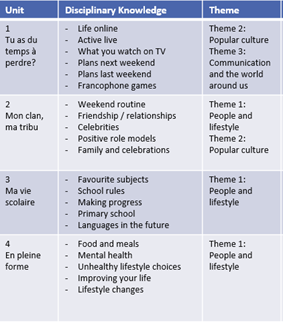
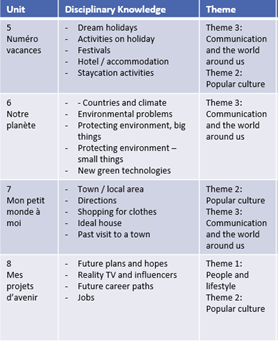
In key stage 4, specifically, we continue with an approach focused on phonics, vocabulary, and grammar – ensuring we cover all topics in the 3 themes of study in the AQA specification.
What will I be studying?
Year 10
Year 11
How will I be assessed?
There are four GCSE papers, one for each language skill:
- Listening
- Speaking
- Reading
- Writing
Each paper is worth 25% of the total marks for the subject.
During Years 10 and 11, teachers make a decision – based upon each student’s progress – on whether to enter students for Foundation or Higher tier exams. This can affect the final grades available to students.
Which examination board am I following?
We follow the AQA French (8652) specification.
Which websites should I use to support my learning?
Languagenut: www.languagenut.com
Who to contact about Phase Two French:
Mr C Adams – Curriculum Leader for Modern Foreign Languages – cadams@cathedral.trinitymat.org
Phase Two (KS4) - Geography
What students are learning through Year 10 and Year 11
Why is Geography important?
Studying Geography is vital for understanding the complex relationships between human societies and the natural environment. With the current climate crisis studying Geography is essential in understanding the world and the challenges it faces. Employments opportunities in the future will be linked to the key topics studied in Geography such as green energy and sustainable living. Additionally, with increasing globalisation it has never been more important to understand different cultures, economies and traditions. GCSE Geography is diverse and incorporates many cross-curricular links and skills, which prepare students for a number of post-16 pathways. Colleges, universities and employers recognise Geography as an academic yet highly transferable course to study.
What will I be studying?
The course is divided into three papers. The content is outlined below:
Paper 1: Natural hazards, climate change, ecosystems, cold environments, coasts and rivers.
Paper 2: Urban issues and challenges (Rio and Bristol), the changing economic world (UK and the wider world), resource management and energy.
Paper 3: Examining a pre-release booklet that is accessible from March before the exam, questions on unseen fieldwork.
How will I be assessed?
There are three papers:
Paper 1: Living with the physical environment (88 marks, 1 hour 30 minutes)
Paper 2: Challenges in the human environment (88 marks, 1 hour 30 minutes)
Paper 3: Pre-release booklet and fieldwork (76 marks, 1 hour 30 minutes)
Which examination board am I following?
AQA GCSE Geography
Which websites should I use to support my learning?
All homework, revision and support for geography at this school is supported by the bespoke school knowledge organisers that all students are given and are available on each class Teams.
All students will be expected to use SENECA weekly (Please see your class teacher for login details to join your class group.)
https://www.aqa.org.uk/subjects/geography/gcse/geography-8035/assessment-resources
https://www.bbc.co.uk/bitesize/examspecs/zy3ptyc
https://www.internetgeography.net/
*If used properly, YouTube has some videos for most topics that can support student learning.
Who to contact about Phase Two:
Morag Murphy – Associate Assistant Principal Humanities –
Phase Two (KS4) - Health and Social Care
What students are learning through Year 10 and Year 11
Why is Health and Social Care important?
Studying Health and Social Care helps students understand how to support and care for people in real-life situations. It teaches key skills such as communication, empathy, and problem-solving, which are essential for working with individuals of all ages and needs.
What will I be studying?
Through this course, students learn about physical, emotional, and social wellbeing, as well as how different factors can affect a person’s health. It also introduces the role of technology in modern care, showing how digital tools and innovations improve the quality and efficiency of services.
Studying this award prepares students for a wide range of future careers in healthcare, social work, and early years education. It also develops transferable skills like teamwork, organisation, and critical thinking, which are valuable in any profession. Overall, it equips learners with both the knowledge and confidence to make a positive difference in people’s lives.
Who to contact about Phase Two Health and Social Care:
Miss L Swailes – Curriculum Leader PE & Health – lswailes1@cathedral.trinitymat.org
Phase Two (KS4) - History
What students are learning through Year 10 and Year 11
Why is History important?
Studying History helps us understand and analyse complex questions and dilemmas by examining how the past has shaped global, national, and local relationships between societies and people. The topics selected ensure that students have a firm understanding of British history in relation to religious, political and scientific developments. The wider world studies ensure that students understand modern developments and the impact these have had in the world around them.
The study of History also refines important skills such as debating, reading and writing. It also develops historical skills such as interpretation of sources and to critique interpretations of the past. Colleges, universities and employers recognise History as an academic yet transferable course to study that can lead to a number of post-16 pathways.
What will I be studying?
- Opportunity and Inequality: The USA 1920 – 1973
- Conflict and Tension in Asia: 1950 – 1975 (The Korean War and the War in Vietnam)
- Health and the People: c1000 – Present Day
- Elizabethan England: 1568 – 1603
How will I be assessed?
Students will be assessed across two 2-hour GCSE examination papers and will be tested on the following:
- AO1: demonstrate knowledge and understanding of the key features and characteristics of the period studied
- AO2: explain and analyse historical events and periods studied using second-order historical concepts
- AO3: analyse, evaluate and use sources (contemporary to the period) to make substantiated judgements, in the context of historical events studied
- AO4: analyse, evaluate and make substantiated judgements about interpretations (including how and why interpretations may differ) in the context of historical events studied
Second-order historical concepts: continuity, change, cause, consequence, significance, similarity and difference.
Which examination board am I following?
Students study AQA GCSE History 8145 (History combination D22). More detail can be found at: https://www.aqa.org.uk/subjects/history/gcse/history-8145/specification-at-a-glance
Which websites should I use to support my learning?
https://members.gcsepod.com/login (Please see your class teacher for login details)
https://www.bbc.co.uk/bitesize/examspecs/zxjk4j6
https://www.historylearningsite.co.uk/
https://schoolhistory.co.uk/notes/
https://www.sparknotes.com/history/
Who to contact about Phase Two History:
Morag Murphy – Associate Assistant Principal Humanities mmurphy@cathedral.trinitymat.org
Phase Two (KS4) - Hospitality and Catering
What students are learning through Year 10 and 11
Why is Hospitality and Catering important?
At Trinity Academy Cathedral, the Hospitality and Catering curriculum equips students with a secure understanding of how the hospitality industry operates in real‑world contexts. The course gives students an insight into how businesses provide food and beverage services, alongside an understanding of accommodation services within the sector.
The curriculum is scenario‑based and encourages students to consider solutions to realistic and relevant problems within a range of hospitality and catering settings, while taking into account the needs of clients, businesses and staff. Students explore how different hospitality and catering businesses operate by studying the structure and organisation of restaurants and hotels, alongside key food safety legislation and health and safety requirements.
Students are taught to think critically about different catering provisions and to suggest ways businesses can operate successfully, legally and safely. Throughout the course, learners draw upon knowledge from other subject areas such as science, mathematics, computing and Key Stage 3 food and nutrition, applying this understanding within a vocational context.
The Hospitality and Catering curriculum also aims to inspire a love of cooking, while embedding a strong understanding of nutrition and healthy eating. Students explore the origin of foods, the effect nutrients have on the human body and how this knowledge is applied when catering for a range of diet groups. A significant emphasis is placed on preparation, cooking and presentation skills that are suitable for service in a professional catering environment.
The WJEC Level 1/2 Vocational Award in Hospitality and Catering has been designed to support learners who wish to develop vocational knowledge and practical skills that can support future study or employment. Career pathways can include roles such as waiting staff, catering assistants, receptionists, chefs, food technologists and hospitality or hotel managers.
What will I be studying?
WJEC Level 1/2 Vocational Award in Hospitality and Catering
Students complete two units across 120 guided learning hours, assessed through a combination of external examination and non‑examined assessment (NEA).
The course is structured to build knowledge and skills progressively across Year 10 and Year 11.
What students are learning through Year 10 and 11
Year 10 – Building Foundations
In Year 10, students focus on foundational knowledge of the hospitality and catering industry alongside the development of core practical skills.
Unit 1: The Hospitality and Catering Industry Students study the following assessment criteria:
- AC1.1 – Understanding the hospitality and catering industry, including:
- Types of hospitality and catering providers
- Uses of hospitality and catering provision
- Job roles and responsibilities within the sector
- AC1.4 – Understanding the importance of food safety in hospitality and catering, including:
- Food safety legislation
- Causes of food contamination and food poisoning
- Control measures to reduce risk
Unit 2: Hospitality and Catering in Action Students begin Unit 2 by studying:
- AC2.1.1 – Understanding the importance of nutrition when cooking dishes
Alongside this, students develop core practical cooking skills, including:
- Safe working practices and hygiene
- Preparation and cooking techniques
- Presentation skills suitable for restaurant‑style service
This prepares students for more complex practical and written assessments in Year 11.
Year 11 – Applying Knowledge and Skills
In Year 11, students build on their knowledge and practical experience to complete the remaining assessment criteria.
Unit 2 Students complete the remaining assessment criteria through a controlled non‑examined assessment (60%), which requires them to:
- Plan dishes to meet the needs of a set brief
- Demonstrate safe preparation, cooking and presentation
- Apply nutritional knowledge
- Evaluate their outcomes and working practices
Unit 1 Students consolidate learning and complete the remaining content in preparation for the external examination (40%), including:
- Front‑of‑house and kitchen operations
- Health and safety in hospitality and catering
- Factors affecting the success of hospitality and catering businesses
- Applying knowledge to industry‑based scenarios
How will I be assessed?
Unit 1 – The Hospitality and Catering Industry
- External written or on‑screen examination
- Worth 40% of the qualification
Unit 2 – Hospitality and Catering in Action
- Controlled non‑examined assessment (NEA)
- Worth 60% of the qualification
Which examination board am I following?
WJEC Level 1/2 Vocational Award in Hospitality and Catering
Which websites should I use to support my learning?
There are no compulsory websites required to support learning. However, WJEC‑endorsed revision guides and textbooks are available to support independent study. (All Students are provided with a free revision guide that compliments our homework plan to use for the duration of the course).
Who to contact about Phase Two Hospitality & Catering
For further information about Hospitality and Catering at Trinity Academy Cathedral, please contact:
Mrs H Dolan
Curriculum Leader – Design Technology & Photography hdolan@cathedral.trinitymat.org
Phase Two (KS4) - Maths
What students are learning through Year 10 and Year 11
Why is Maths important?
The Maths GCSE qualification is essential to join further education, an apprenticeship or gainful employment. In a technological world Maths is the most crucial skill sought by employers and educational establishments. Maths leads directly into sought-after careers such as coding, engineering & finance, and develops key skills in problem solving, logical thinking and analysing data. Students who do not pass Maths at least at a grade 4 will be required to retake the qualification at college.
What will I be studying?
The main strands of GCSE maths are split into the following:
- Number
- Algebra
- Ratio, proportion and rates of change
- Geometry and measures
- Probability
- Statistics
These are taught in units starting in Year 10.
- Number Skills
- Factors, Multiples and Primes (introduction to Venn diagrams)
- Fractions 1
- Area, Perimeter and Volume
- Fractions 2
- Manipulating Algebra
- Solving Linear Equations and Inequalities
- Ratio and Proportion
- Percentages
- Substitution and Nth Term
- Linear Graphs and rearranging formula
- Angles
- Pythagoras and Trigonometry
- Circles and Cylinder
- Simultaneous Equations
- Non-linear Functions and Non-linear Functions Higher
- Algebraic Fractions
- Proof
- Surds and Indices
- Further Trigonometry
- Direct and Indirect Proportion
- Functions
- Further Graphs
- Transformations
- Surface Area and Volume
- Probability 1 – Intro to probability, 2-way tables & Venn diagrams
- Probability 2 – Combined Events
- Handling Data
- Constructions
- Powers and Standard Form
- Compound Measures and Scale Drawings
- Circle Theorems
- Vectors
How will I be assessed?
Maths GCSE is 100% assessed through examination. In total there are three exam papers that need to be completed; 1.5 hours each. Paper 1 is non-calculator. Paper 2 is calculator and paper 3 is calculator. Each paper is out of 80 marks and will be sat in the summer exam window.
Which examination board am I following?
Edexcel Higher and Edexcel Foundation. Some groups may sit OCR Foundation rather than Edexcel Foundation.
Which websites should I use to support my learning?
Corbettmaths.com and Drfrost.org
Who to contact about Phase Two Maths :
Garnel Singh – Curriculum Leader Maths – gsingh@cathedral.trinitymat.org
Phase Two (KS4) - Media
BTEC Tech Award in Creative Media Production (2022) – Level 1/2
What students are learning through Year 10 and Year 11
Why is Creative Media Important?
Students interact with media constantly — through film, television, online video, social media, advertising and digital storytelling. Understanding how these products are created helps students become informed consumers and confident creators. Creative Media Production allows learners to explore how meaning is communicated through different media forms while developing hands‑on creative and technical skills. The course also introduces students to the workings of the media industry, supporting progression into further study, apprenticeships and a wide range of creative careers.
What Will I Be Studying?
Component 1: Exploring Media Products
In this component, students explore a wide range of media products from different sectors, such as film, television, publishing, audio and digital media. They learn how creators use genre, narrative, representation and production techniques to communicate meaning and appeal to specific audiences. By comparing how different media producers approach similar themes, students develop strong analytical skills and gain a deeper understanding of how professional media products are constructed.
Component 2: Developing Digital Media Production Skills
This component focuses on developing practical digital media production skills. Students learn how to generate creative ideas, produce pre‑production materials and use a variety of production and post‑production techniques to create their own media product. Throughout the process, they review their work, refine their ideas and make improvements based on feedback. This hands‑on experience helps students build the creative and technical skills needed in real media production environments.
Component 3: Create a Media Product in Response to a Brief
In this externally assessed component, students respond to a brief set by Pearson, mirroring real industry practice. They interpret the requirements of the brief, develop ideas and plan a suitable media product to meet the intended purpose and audience. Students then produce their final media product using appropriate techniques and evaluate how effectively it meets the brief. This component develops independence, creativity and the ability to work professionally under controlled conditions.
How Will I Be Assessed?
| Component | Title | GLH | Level | Assessment Type |
| 1 | Exploring Media Products | 36 | 1/2 | Internal (Pearson‑set) |
| 2 | Developing Digital Media Production Skills | 36 | 1/2 | Internal (Pearson‑set) |
| 3 | Create a Media Product in Response to a Brief | 48 | 1/2 | External Exam |
Final grades available at Level 2: Pass, Merit, Distinction, Distinction*
Examination Board
Pearson BTEC Tech Award in Creative Media Production (2022) Qualification number: 603/7053/1
Creative Media Production (2022) | BTEC Tech Awards | Pearson qualifications
Useful Websites to Support Learning
- BBC Bitesize – Media Studies
- ScreenSkills (industry insights & career guidance)
- IntoFilm (film analysis & resources)
- Pearson Creative Media Production page (search “Creative Media Production 2022 Pearson”)
Who to Contact About Phase Two Creative Media
Mr P Donlon – Curriculum Leader – Computing, Media & Business –pdonlon@cathedral.trinitycathedral.org
Phase Two (KS4) - Music
What students are learning through Year 10 and Year 11
Why is Music important?
It is increasingly difficult to go through a day without encountering music in some form. Whether it is heard on the radio, played in public spaces, or used as part of a film or media experience, music is an integral aspect of everyday life. Its presence is significant because of the powerful role it plays in shaping memory, influencing emotional responses and providing a means of creative expression.
Research demonstrates that sustained engagement with music supports cognitive development. Pupils who learn to sing or play an instrument often show enhanced abilities in areas such as problem solving, pattern recognition and mathematical understanding. In addition, music contributes to the development of a wide range of transferable skills, including discipline, collaboration, communication, emotional intelligence, motor coordination and literacy. These skills are essential for both academic success and personal development.
Music also functions as a universal language. Across all cultures and societies, music is used to communicate meaning, express identity and bring communities together. This global relevance is reflected in the continued growth of the creative industries, which remain a significant and expanding sector within the UK economy. Music is therefore important not only artistically, but also socially and economically.
What will I be studying?
Pupils will study the Pearson BTEC Tech Award in Music Practice (Level 1/Level 2). The course is structured around three components which develop practical skills, industry knowledge and creative understanding.
Component 1: Exploring Music Products and Styles
Pupils will explore a range of music products and styles, developing an understanding of how musical elements are used to meet the needs of different audiences and purposes.
Component 2: Music Skills Development
Pupils will develop practical skills in performance, composition and music production. This includes refining techniques, building confidence and applying industry-relevant approaches to music-making.
Component 3: Responding to a Music Brief (Externally Assessed)
Pupils will apply their knowledge and skills to respond to a set brief. This involves creating a music product within defined constraints, demonstrating planning, development and evaluation in a controlled assessment environment.
The course is designed to reflect real-world music industry practice, enabling pupils to work as performers, composers and producers while developing independence, creativity and professionalism.
How will I be assessed?
Assessment is divided between internal coursework and an external assessment.
Component 1 and Component 2 are internally assessed. Pupils will produce a portfolio of work which may include written analysis, practical recordings, compositions and evidence of skill development.
Component 3 is externally assessed. Pupils will respond to a live brief set by Pearson, producing a completed music product alongside supporting documentation under supervised conditions.
Assessment focuses on both the quality of practical outcomes and the understanding of the processes used to create them.
Which examination board am I following?
This course is the Pearson BTEC Tech Award in Music Practice (Level 1/Level 2).
Which websites should I use to support my learning?
Industry insight and careers:
- UK Music – industry reports, career pathways and current trends
- PRS for Music – understanding royalties, copyright and music ownership
- Musicians’ Union – professional guidance on working in the industry
- Creative and Cultural Skills – career routes and skills development
Practical music creation and production:
- BandLab for Education – the main platform used to compose, record and produce music, including collaboration and teacher feedback tools
Listening, analysis and musical understanding:
- Spotify – curated playlists to explore genres and styles
- YouTube – performances, tutorials and production breakdowns
- BBC Bitesize – clear explanations of musical concepts and terminology
Theory and technical knowledge:
- MusicTheory.net – interactive lessons and exercises
- Teoria – more advanced theory and ear training
Revision and knowledge recall:
- Study.com
- Memrise
- Quizlet
Who should I contact about Music?
Who to contact about Phase Two Music:
Mr Michael Fahey – Curriculum Leader for CAPA Juniors and Performing Arts – music@cathedral.trinitymat.org
Phase Two (KS4) - Religious Studies
What students are learning through Year 10 and Year 11
Why is Religious Studies important?
The Vision is to provide opportunities for transformation through access to an excellent educational experience and awareness of spiritual and moral development. The Mission is to enable people to transform their lives through the RS curriculum and SMSC opportunities, enhanced by outstanding teaching & learning, teamwork and progress.
This is delivered through a curriculum that teaches fundamental knowledge and skills pupils must master, in line with the Church of England Statement of Entitlement and through collaboration with the local diocese and Understanding Christianity. The curriculum places the academy’s values at its core and accommodates all learners from point of entry. It ensures challenge whilst providing all with a theological basis building on prior attainment.
We use regular assessment and recall so that students can outline religious teachings, language (tier 1&2) knowledge and can explain their impact on the world. Through evaluation skills, we develop tolerance and empathy. This is achieved through:
- A Quick 6, Knowledge Organisers and Masters of Recall tests
- Zonal marking and sample marking of written work providing clear feedback
- Termly synoptic tests and exam-style questions to ensure accurate reporting of pupil data and to identify key misconceptions or areas of exam technique to be developed.
What will I be studying?
Christianity & Islamic beliefs and ways of living.
How will I be assessed?
2 exam papers, 1hr ¾
Which examination board am I following?
Edexcel
Content

Which websites should I use to support my learning?
GCSE Bitesize
Who to contact about Phase Two Religious Studies:
Miss Toney – Curriculum Leader RS – ktoney@cathedral.trinitymat.org
Phase Two (KS4) - Photography
What students are learning through Year 10 and Year 11
Why is Art and Design – Photography important?
Why is Photography important?
Photography allows people to see the world from a wide range of perspectives. A photograph captures moments, ideas and complex scenarios, freezing them within a frame so that experiences can be revisited, interpreted and appreciated long after the image is taken.
At Trinity Academy Cathedral, the Photography curriculum aims to develop a passion for creativity and visual communication, while equipping students with the technical knowledge and practical skills needed to experiment confidently and find creative solutions to a variety of themes and briefs. Students are given opportunities to explore the work of a diverse range of photographers and artists, both historical and contemporary, from different cultures and contexts.
The photography curriculum develops students’ moral, social and cultural awareness, encouraging them to consider ethical issues, personal viewpoints and the impact photography can have in society. Throughout the course, students gain a strong understanding of the formal elements and how these can be used to communicate meaning. Students are explicitly taught how to use composition, colour, tone, line, texture, contrast, scale and lighting to convey their intentions.
Students are encouraged to think critically, reflect on their own work and the work of others, and develop an independent and personal artistic style. The curriculum promotes an inclusive environment where students feel confident expressing their ideas, interests and personal responses while understanding how photography can contribute to wider social and cultural conversations. Learning builds on prior knowledge from Key Stage 3 Art, using accurate artistic and critical vocabulary throughout.
What will I be studying?
GCSE Art and Design – Photography (AQA 8206)
Students complete two components across 120 guided learning hours. Work is assessed against the four AQA Assessment Objectives (AO1–AO4) and is externally moderated.
- Component 1: Portfolio (Coursework) – 60%
- Component 2: Externally Set Assignment – 40%
All work is combined to produce a final GCSE grade.
What students are learning through Year 10 and Year 11
Year 10 – Foundations and Skill Development
In Year 10, students are introduced to the fundamentals of photography and visual communication. The focus is on developing technical competence, creative confidence and an understanding of how photographers work.
Students complete an Introduction to Photography project, which includes:
- Learning how to use cameras and photographic equipment
- Exploring composition, lighting and viewpoint
- Developing skills in digital editing and image manipulation
- Recording ideas, observations and visual experiments
- Researching and responding to the work of photographers and artists
Students work through structured workshops, trials and mini projects, gradually building a small portfolio that demonstrates experimentation and skill development.
Year 11 – Sustained and Independent Practice
In Year 11, students complete a sustained project as part of Component 1, allowing them to develop ideas in greater depth and refine their personal style. Students:
- Investigate photographers and visual sources independently
- Develop and refine ideas through experimentation
- Record their thought process through annotation and visual evidence
- Produce a meaningful final outcome that reflects their intentions
Later in Year 11, students complete Component 2: Externally Set Assignment, which is issued by AQA. Students select a starting point and complete:
- A preparatory period of development work
- A 10‑hour controlled practical exam, where they produce a final outcome under exam conditions
This component assesses students’ ability to work independently, manage time effectively and bring together skills and understanding developed across the course.
How will I be assessed?
All work is assessed using the four AQA Art and Design Assessment Objectives, which are equally weighted:
- AO1 – Develop ideas through investigation and research
- AO2 – Experiment with and refine processes, techniques and materials
- AO3 – Record ideas, observations and insights
- AO4 – Present a personal and meaningful final response
Component 1: Portfolio
- Sustained project plus supporting work
- Assessed internally and externally moderated
- Worth 60% of the final grade
Component 2: Externally Set Assignment
- Includes a 10‑hour controlled exam
- Externally set and assessed
- Worth 40% of the final grade.
Which examination board am I following?
AQA GCSE Art and Design – Photography (8206)
Which websites should I use to support my learning?
There are no compulsory websites for this course.
Who to contact about Phase Two Photography
For further information about GCSE Photography at Trinity Academy Cathedral, please contact:
Miss H Dolan
Curriculum Leader – Design Technology & Photography
hdolan@cathedral.trinitymat.org
Phase Two (KS4) - Science
What students are learning through Year 10 and Year 11
Why Science Is Important
Science helps pupils understand the world around them and prepares them to thrive in an increasingly technological age. Our curriculum, at Trinity Academy Cathedral, cultivates a broad base of scientific understanding across key disciplines, enabling pupils to recall, apply, and connect the scientific principles that underpin modern life.
We teach all content through three Golden Threads that run from Year 7 to Year 11:
- Energy and Forces
- Chemical Reactions
- Life Processes
These threads allow pupils to build secure, cumulative knowledge and to revisit key ideas in greater depth over time.
Alongside knowledge, pupils develop essential scientific skills:
- Analytical mathematics taught explicitly in a scientific context
- Critical thinking to interpret evidence, evaluate methods, and justify conclusions
- Scientific communication, enabling pupils to use Tier 3 vocabulary fluently and confidently
Regular assessment, retrieval practice, and independent study ensure pupils retain the fundamental knowledge required to progress as scientists.
This includes:
- Regular retrieval practice through Quick 6, questioning, and homework
- Live feedback delivered through model marking and whole‑class questioning to address misconceptions in real time.
- Green Feedback Sheets used at least once per topic and after assessments to reteach, review, and secure key knowledge
- Homework that extends learning beyond the classroom and informs subsequent teaching
What will I be studying?
Please click here to view the curriculum content.
How will I be assessed?
For pupils studying Combined Science, there are six exam papers in total: two Biology, two Chemistry and two Physics. All exams are taken at the end of Year 11, and each paper lasts 1 hour 10 minutes. Pupils receive two GCSE grades for Combined Science.
For pupils studying Triple Science, there are also six exam papers: two Biology, two Chemistry and two Physics. These are taken at the end of Year 11, and each paper lasts 1 hour 45 minutes. Pupils receive three separate GCSE grades, one for each science discipline.
Which examination board am I following?
OCR Oxford Cambridge and RSA
Combined:
GCSE – Gateway Science Suite – Combined Science A (9-1) – J250 (from 2016) – OCR
Triple:
Biology – https://www.ocr.org.uk/qualifications/gcse/gateway-science-suite-biology-a-j247-from-2016/
Chemistry – https://www.ocr.org.uk/qualifications/gcse/gateway-science-suite-chemistry-a-j248-from-2016/
Physics – https://www.ocr.org.uk/qualifications/gcse/gateway-science-suite-physics-a-j249-from-2016/
Which websites should I use to support my learning?
https://www.ocr.org.uk/subjects/
https://www.senecalearning.com/
https://www.bbc.co.uk/bitesize
Carousel Study pack – Teacher will provide the link
Who to contact about Phase Two Science:
Mrs S Thomas – Curriculum Leader for Science – sthomas@cathedral.trinitymat.org
Phase Two (KS4) - BTEC Sport
What students are learning through Year 10 and Year 11
Why is BTEC Sport important?
The Tech Award has been developed to provide preparation for employment within the sport and leisure industry. This course gives learners the opportunity to develop sector-specific applied knowledge and skills through realistic vocational contexts. Learners will have the opportunity to develop applied knowledge and skills in the following areas:
- Investigating provisions for sport including equipment and facilities to enhance sport
- Planning and delivery of sports drills and sessions
- Fitness for sport including fitness testing and methodology.
What will I be studying?
Component 1: Preparing Participants to Take Part in Sport and Physical Activity
You will explore the different types and provision of sport and physical activity available for different types of participants, barriers to participation and ways to overcome these barriers to increase participation in sport and physical activity. You will also research equipment and technological advances in a chosen sport or physical activity and how to prepare our bodies for participation in sport and physical activity.
Component 2: Taking Part and Improving Other Participants Sporting Performance
You will investigate the components of fitness and their effect on performance, take part in practical sport, explore the role of officials in sport and learn to apply methods and sporting drills to improve other participants’ sporting performance.
Component 3: Developing Fitness to Improve Other Participants Performance in Sport and Physical Activity
You will be introduced to and develop an understanding of the importance of fitness and the different types of fitness for performance in sport and physical activity. They will also develop an understanding of the body and fitness testing.
How will I be assessed?

Four grades at Level 2 – Pass, Merit, Distinction, Distinction*
Which examination board am I following?
https://qualifications.pearson.com/en/qualifications/btec-tech-awards/sport-2022.html
Which websites should I use to support my learning?
https://www.britishathletics.org.uk/
https://tabletennisengland.co.uk/
https://www.basketballengland.co.uk/
What type of career could this course lead to?
- PE Teacher
- Sports & Exercise Coach
- Sports & Exercise Instructor
- Armed Services
- Sports Administration
- Physiotherapy
- Lifeguard
- Sports Journalist
- Sports Centre Attendant
- Outdoor Education Instructor
- Firefighter
- Professional Sportsman/Woman
Who to contact about Phase Two BTEC Sport:
Miss L Swailes – Curriculum Leader PE & Health – lswailes1@cathedral.trinitymat.org